Complex Coronary Stent Intervention
Complex Coronary Stent Intervention
Complex Coronary Stent Intervention is an advanced interventional cardiology procedure used to treat coronary artery blockages that may be difficult to manage with conventional angioplasty and stenting. Complex coronary disease can involve multiple blocked arteries, severe narrowing, calcified lesions, long lesions, or blockages located in technically challenging areas of the coronary arteries.
Dr. Pradeep Kumar Bansal, Chief Interventional Cardiologist and Heart Failure in Jaipur, provides specialised cardiac evaluation and interventional care for patients with complex coronary artery disease. With qualifications including MBBS, MD in Internal Medicine from SMS Medical College, Jaipur, and DM in Cardiology, he brings advanced cardiology training and clinical experience to the management of challenging coronary conditions.
What Is Complex Coronary Stent Intervention?
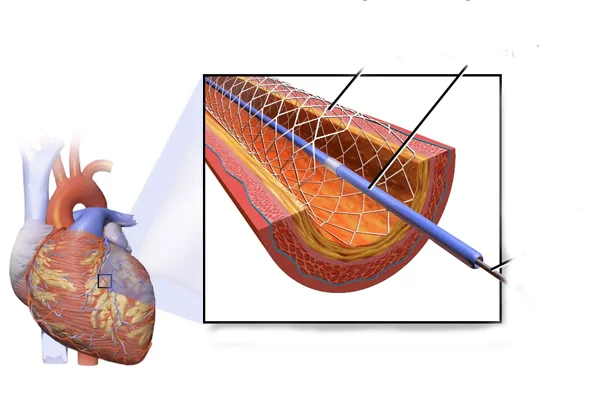
Complex coronary stent intervention is a specialised form of percutaneous coronary intervention (PCI) performed when coronary artery disease presents additional technical challenges. The procedure aims to restore adequate blood flow through narrowed or blocked coronary arteries using balloon angioplasty and coronary stents.
Compared with straightforward coronary angioplasty, complex PCI may require detailed assessment of the coronary anatomy, specialised equipment, advanced imaging, and carefully planned intervention. The exact treatment strategy depends on factors such as the location and severity of blockages, vessel size, calcium burden, previous stents, and the overall health of the patient.
Who May Need Complex Coronary Intervention?
Patients with certain patterns of coronary artery disease may require a more specialised intervention. Complex coronary stent intervention may be considered for patients with:
- Multiple coronary artery blockages
- Severely narrowed coronary arteries
- Heavily calcified coronary lesions
- Long or diffuse coronary lesions
- Difficult-to-access coronary blockages
- Previously placed stents with recurrent narrowing
- Complex lesions involving important coronary branches
- Chronic or technically challenging coronary blockages
A cardiologist evaluates the patient's symptoms, medical history, diagnostic test results, and coronary angiography before determining the most appropriate treatment approach.
How Is Complex Coronary Stenting Performed?
Complex coronary stenting is generally performed through a catheter-based approach. A thin catheter is introduced through a blood vessel and guided toward the coronary arteries. Coronary angiography helps the cardiologist visualise the location and severity of the blockage.
Depending on the nature of the lesion, specialised wires, balloons, catheters, and other interventional tools may be used to cross and prepare the narrowed section. A coronary stent can then be positioned within the treated artery to help maintain an open passage and improve blood flow.
The specific technique varies from patient to patient. Complex interventions require careful planning because coronary anatomy, lesion characteristics, and the patient's overall cardiovascular condition can differ significantly.
Advanced Imaging in Complex PCI
Detailed visualisation can be particularly valuable when treating challenging coronary lesions. Advanced intravascular imaging techniques such as IVUS (Intravascular Ultrasound) and OCT (Optical Coherence Tomography) can provide information about the vessel and lesion from inside the coronary artery.
These technologies may assist in assessing plaque characteristics, vessel dimensions, lesion severity, and stent placement. In selected patients, imaging-guided intervention can help the cardiologist develop a more precise treatment strategy.
FFR-Guided Stenting Strategy
Fractional Flow Reserve (FFR) is an invasive physiological assessment that can help determine whether a coronary narrowing significantly affects blood flow. In appropriate cases, FFR can provide additional information when deciding whether a particular coronary lesion requires intervention.
An FFR-guided strategy may therefore be considered when angiography alone does not provide sufficient information about the functional significance of a blockage.
Importance of Individualised Treatment Planning
Complex coronary artery disease requires careful evaluation rather than a single treatment approach for every patient. Factors such as age, symptoms, diabetes, blood pressure, kidney function, previous cardiac procedures, coronary anatomy, and overall cardiovascular health may influence treatment decisions.
Dr. Pradeep Kumar Bansal focuses on comprehensive cardiac assessment and personalised treatment planning to determine an appropriate interventional strategy for each patient.
Benefits of Complex Coronary Stent Intervention
When clinically appropriate, catheter-based coronary intervention may help restore blood flow through a significantly narrowed coronary artery. Potential benefits may include:
- Improvement in blood flow to the heart muscle
- Relief of symptoms associated with coronary artery disease
- Treatment of significant coronary blockages
- Minimally invasive access compared with open-heart surgery
- Support for improved functional capacity in appropriately selected patients
The expected outcome depends on the patient's underlying heart condition, the complexity of the coronary disease, and other individual health factors.
Complex Coronary Stent Intervention in Jaipur
Patients requiring specialised management of challenging coronary blockages can consult Dr. Pradeep Kumar Bansal, Chief Interventional Cardiologist and Heart Failure in Jaipur. He has advanced qualifications in cardiology and experience in interventional cardiac care.
His clinical practice includes evaluation and management of coronary artery disease and advanced interventional procedures, with treatment strategies selected according to each patient's cardiac condition.
Why Choose Dr. Pradeep Kumar Bansal?
- DM in Cardiology with advanced specialist training
- MD in Internal Medicine from SMS Medical College, Jaipur
- Former Assistant Professor of Cardiology at UNMICRC, BJMC, Ahmedabad
- Expertise in Interventional Cardiology
- Specialised focus on Heart Failure Management
- Gold Member of the Heart Failure Association of India
- Patient-focused and personalised cardiac treatment planning
When Should You Consult a Cardiologist?
Chest discomfort, breathlessness, unexplained fatigue, palpitations, or reduced exercise tolerance can require medical evaluation, particularly in people with cardiovascular risk factors.
Patients who have already been diagnosed with coronary artery disease, have undergone previous angioplasty or stenting, or have been advised to undergo an advanced coronary intervention should discuss their treatment options with an experienced interventional cardiologist.
Frequently Asked Questions
Is complex coronary stenting different from regular angioplasty?
Yes. Complex coronary intervention involves coronary lesions that may have additional anatomical or technical challenges and may require specialised planning, equipment, or imaging.
Is complex coronary stenting a minimally invasive procedure?
Yes. Coronary stenting is performed using a catheter-based approach rather than conventional open-heart surgery. The exact procedure and recovery depend on the patient's condition.
Is IVUS or OCT required for every coronary stent procedure?
No. The use of IVUS or OCT depends on the patient's coronary anatomy, lesion characteristics, clinical situation, and the cardiologist's assessment.
What is FFR in coronary intervention?
FFR, or Fractional Flow Reserve, is a physiological measurement used to assess whether a coronary narrowing significantly affects blood flow.
How is the treatment decided for complex coronary blockages?
Treatment is based on detailed clinical assessment, coronary angiography, lesion characteristics, medical history, and the patient's overall cardiovascular condition.
Where can I consult for complex coronary stent intervention in Jaipur?
You can consult Dr. Pradeep Kumar Bansal, Chief Interventional Cardiologist and Heart Failure Specialist, for evaluation and treatment planning for complex coronary artery disease in Jaipur.
Conclusion
Complex coronary stent intervention is an advanced approach to managing selected patients with technically challenging coronary artery disease. Detailed evaluation, appropriate treatment planning, and the use of advanced interventional techniques can play an important role in managing complex coronary blockages.
Dr. Pradeep Kumar Bansal provides specialised interventional cardiology and heart failure care in Jaipur, with a focus on comprehensive evaluation and personalised cardiac treatment.