Renal and Peripheral Artery Stenting
Renal and Peripheral Artery Stenting
Renal and peripheral artery disease can affect blood circulation to important organs and limbs. Narrowing or blockage in these arteries may develop due to plaque buildup and other vascular conditions, potentially affecting kidney function, walking ability, or overall circulation. In selected patients, Renal and Peripheral Artery Stenting may be recommended to improve blood flow through the affected artery.
Dr. Pradeep Kumar Bansal, Chief Interventional Cardiologist and Heart Failure in Jaipur, provides specialised interventional cardiac and vascular care based on detailed evaluation of each patient's condition. With advanced training in cardiology and experience in interventional procedures, he focuses on appropriate treatment planning for patients requiring artery-based interventions.
What Is Renal and Peripheral Artery Stenting?
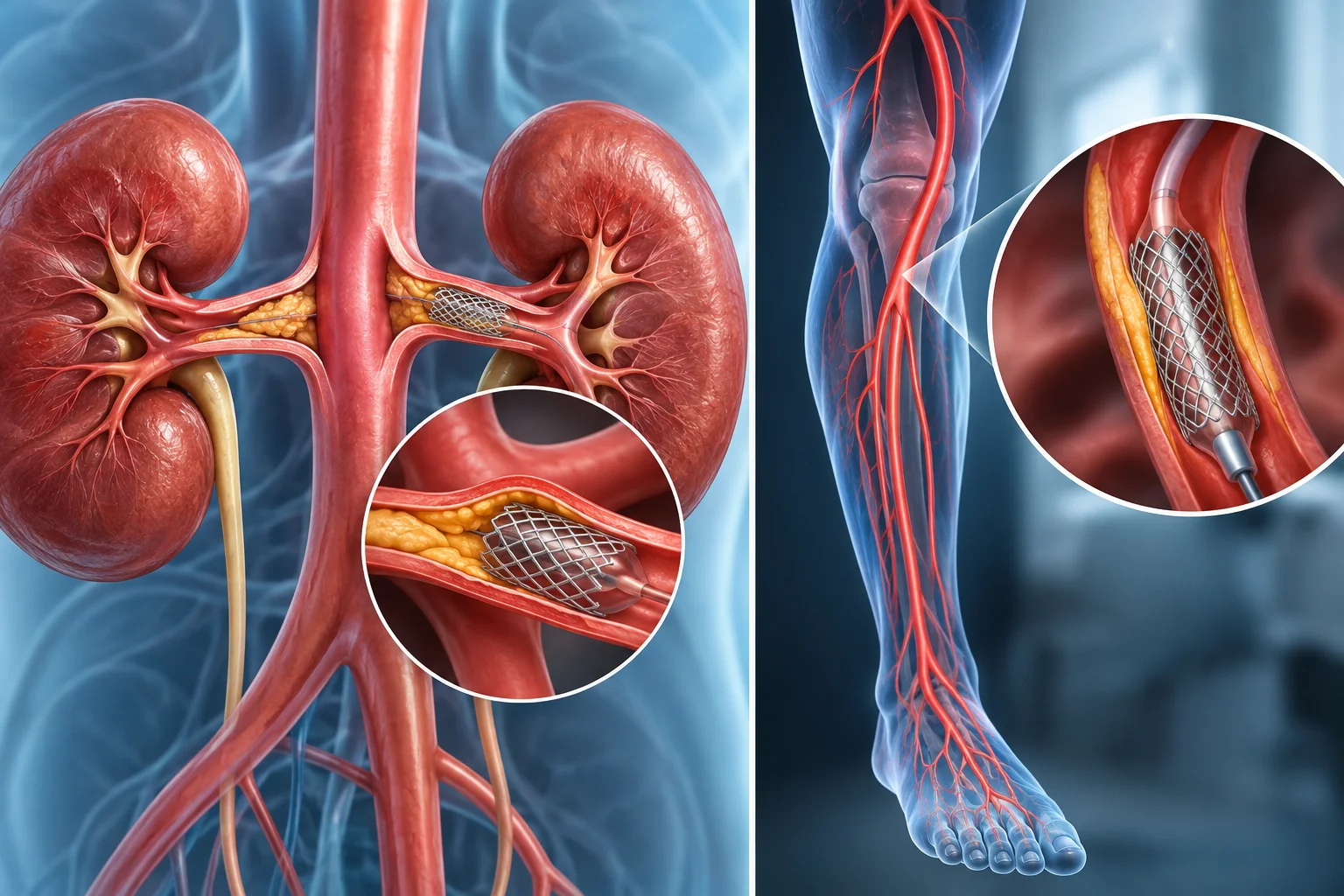
Renal and peripheral artery stenting is a minimally invasive catheter-based procedure used to support a narrowed artery and help improve blood flow.
Renal artery stenting focuses on arteries that supply blood to the kidneys, while peripheral artery stenting may be used to treat narrowing in arteries supplying areas such as the legs and other peripheral regions.
A small mesh-like stent is positioned within the affected artery to help maintain its opening after the narrowed segment has been treated.
The suitability of stenting depends on the location and severity of the narrowing, symptoms, blood-flow impairment, and the patient's overall medical condition.
Renal Artery Stenting
The renal arteries carry blood from the main circulation to the kidneys. Narrowing of these arteries, known as renal artery stenosis, can affect blood flow to the kidneys.
In selected patients, renal artery stenting may be considered after a comprehensive assessment of the vascular condition and associated clinical factors.
The procedure uses catheter-based access to reach the affected renal artery. Once the narrowed area has been identified and appropriately treated, a stent may be positioned to support the artery.
Treatment decisions are individualised because not every patient with renal artery narrowing requires stenting.
Peripheral Artery Stenting
Peripheral artery disease can occur when arteries outside the heart become narrowed or blocked, commonly affecting blood flow to the legs.
Patients with significant peripheral arterial narrowing may experience symptoms such as:
- Leg pain while walking
- Leg discomfort that improves with rest
- Reduced walking distance
- Weakness or heaviness in the legs
- Changes associated with reduced circulation
In selected cases, peripheral artery stenting may be used to help improve blood flow through the affected vessel.
Who May Need Artery Stenting?
Renal or peripheral artery stenting may be considered for selected patients with clinically significant arterial narrowing.
A specialist evaluation may consider:
- Location of the arterial narrowing
- Severity of the blockage
- Symptoms and functional limitations
- Blood-flow abnormalities
- Kidney-related factors in renal artery disease
- Overall cardiovascular health
- Results of relevant diagnostic investigations
The decision to proceed with stenting is based on the patient's individual condition rather than the presence of narrowing alone.
How Is Renal and Peripheral Artery Stenting Performed?
The procedure is performed using a minimally invasive catheter-based approach.
The general process includes:
- Appropriate vascular access is established.
- A thin catheter is guided through the blood vessel.
- Imaging is used to identify the affected artery.
- The narrowed area is carefully assessed.
- The lesion is treated using appropriate interventional equipment.
- A stent may be positioned across the narrowed segment.
- The stent is expanded to support the artery.
- Blood flow through the treated vessel is assessed before completing the procedure.
The exact technique varies depending on the artery being treated and the characteristics of the blockage.
Importance of Detailed Vascular Assessment
Careful evaluation is an important part of planning renal and peripheral artery interventions. The cardiologist assesses the patient's symptoms, medical history, vascular condition, and relevant investigation findings.
Understanding the location and severity of arterial narrowing helps determine the most appropriate treatment strategy.
In some patients, medical management and risk-factor control may be appropriate, while selected patients may benefit from an interventional procedure.
Benefits of Renal and Peripheral Artery Stenting
For appropriately selected patients, artery stenting may help improve blood flow through a significantly narrowed vessel.
Potential benefits include:
- Minimally invasive treatment
- Improved blood flow through the treated artery
- Catheter-based treatment approach
- No conventional open surgical incision
- Targeted treatment of arterial narrowing
- Potential improvement in circulation-related symptoms
The expected outcome depends on the location and severity of the blockage, the patient's overall health, and other underlying vascular conditions.
Recovery After Artery Stenting
Recovery following renal or peripheral artery stenting varies depending on the procedure performed and the patient's overall health.
The treating specialist provides individual instructions regarding medications, physical activity, follow-up, and management of cardiovascular risk factors.
Regular follow-up is important to monitor the patient's condition and support long-term vascular health.
Renal and Peripheral Artery Stenting in Jaipur
Patients with significant arterial narrowing may require assessment by an experienced interventional specialist to determine whether catheter-based treatment is appropriate.
Renal and Peripheral Artery Stenting in Jaipur provides a minimally invasive treatment option for selected patients with renal or peripheral arterial disease.
Dr. Pradeep Kumar Bansal is a Chief Interventional Cardiologist and Heart Failure in Jaipur. He has completed MBBS, MD in Internal Medicine from SMS, Jaipur, and DM in Cardiology.
He has also served as a Former Assistant Professor of Cardiology at UNMICRC, BJMC, Ahmedabad, and is a Gold Member of the Heart Failure Association of India.
Dr. Pradeep Kumar Bansal provides specialised interventional care at Dhanwantari Hospital and Research Centre, Mansarovar, Jaipur.
Why Choose Dr. Pradeep Kumar Bansal?
Interventional procedures require careful assessment and appropriate treatment planning. Dr. Pradeep Kumar Bansal combines advanced cardiology training with clinical experience in interventional care.
Patients can benefit from:
- Advanced interventional cardiology expertise
- Detailed assessment of arterial disease
- Individualised treatment planning
- Minimally invasive treatment approach
- Comprehensive cardiovascular evaluation
- Patient-focused cardiac care
His approach emphasises appropriate evaluation before recommending an interventional procedure.
When Should You Consult a Cardiologist?
Patients experiencing symptoms suggestive of reduced circulation should undergo appropriate medical evaluation. Leg discomfort during walking, reduced walking capacity, or other circulation-related symptoms may require assessment for peripheral arterial disease.
Patients with known renal artery disease or other vascular conditions may also require specialist evaluation to determine the most suitable management approach.
Sudden severe limb pain, significant colour changes, coldness, or sudden loss of circulation requires urgent medical attention.
Frequently Asked Questions
1. What is Renal Artery Stenting?
Renal artery stenting is a minimally invasive catheter-based procedure used in selected patients to support a narrowed renal artery and improve blood flow.
2. What is Peripheral Artery Stenting?
Peripheral artery stenting is a catheter-based procedure used to treat selected significant narrowings in peripheral arteries and help improve blood circulation.
3. Is stenting required for every arterial blockage?
No. The need for stenting depends on the severity and location of the narrowing, symptoms, blood-flow impairment, and the patient's overall condition.
4. How is artery stenting performed?
A thin catheter is guided through a blood vessel to the affected artery. After assessment and treatment of the narrowed area, a stent may be positioned to support the vessel.
5. Who performs Renal and Peripheral Artery Stenting in Jaipur?
Dr. Pradeep Kumar Bansal is a Chief Interventional Cardiologist and Heart Failure in Jaipur with advanced training in cardiology and interventional cardiac care.
6. Where can I consult Dr. Pradeep Kumar Bansal?
Dr. Pradeep Kumar Bansal provides specialised cardiac and interventional care at Dhanwantari Hospital and Research Centre, Mansarovar, Jaipur.
Conclusion
Renal and Peripheral Artery Stenting in Jaipur is a minimally invasive treatment option for selected patients with significant narrowing of renal or peripheral arteries. Through a catheter-based approach, a stent can be positioned within the affected artery to help support the vessel and improve blood flow.
Dr. Pradeep Kumar Bansal, Chief Interventional Cardiologist and Heart Failure Specialist, provides comprehensive evaluation and individualised treatment planning for patients requiring interventional vascular care in Jaipur.