Advanced Angioplasty
Advanced Angioplasty
Advanced Angioplasty is a specialised interventional cardiology procedure used to treat selected coronary artery blockages and restore blood flow to the heart. With developments in cardiac imaging, pressure-based assessment and stent technology, angioplasty can be planned with greater precision for patients with complex or significant coronary artery disease.
Dr. Pradeep Kumar Bansal is a Chief Interventional Cardiologist and Heart Failure in Jaipur with advanced training in Internal Medicine and Cardiology. His approach focuses on detailed cardiac evaluation, appropriate procedural planning and personalised treatment based on the patient's cardiovascular condition.
What Is Advanced Angioplasty?
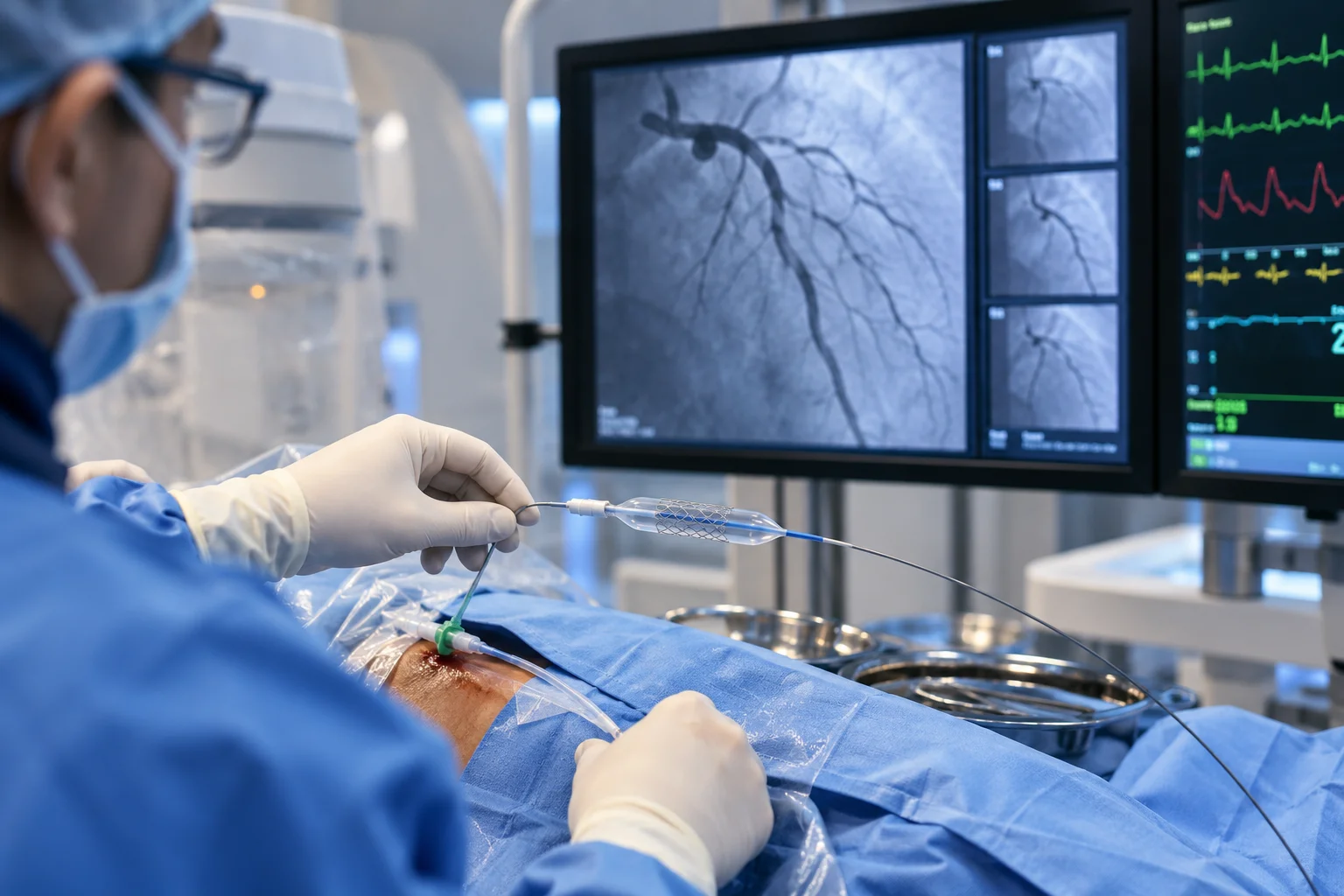
Advanced Angioplasty is a catheter-based treatment used to open narrowed or blocked coronary arteries. The procedure is generally performed through a blood vessel in the wrist or groin, allowing specialised catheters and other devices to reach the coronary arteries.
During angioplasty, a balloon may be used to widen a narrowed section of an artery, followed by placement of a stent when required. In more complex cases, additional techniques and technologies may be used to understand the artery, assess the significance of a blockage and optimise stent placement.
The exact angioplasty strategy depends on factors such as the location and severity of blockage, number of affected vessels, symptoms, heart function and overall health.
When May Advanced Angioplasty Be Recommended?
Angioplasty may be considered for selected patients with significant coronary artery disease. Depending on the clinical situation, advanced angioplasty may be useful when coronary blockages are complex or require more detailed procedural planning.
A cardiologist may consider angioplasty after evaluating:
- Symptoms such as chest discomfort or breathlessness
- Results of cardiac investigations
- Severity and location of coronary artery narrowing
- Number of affected coronary vessels
- Heart function
- Medical history and cardiovascular risk factors
- Findings from coronary angiography
Not every coronary blockage requires angioplasty. A cardiologist determines whether medication, lifestyle management, angioplasty or another treatment approach is appropriate.
How Is Advanced Angioplasty Performed?
Advanced Angioplasty begins with a detailed assessment of the coronary arteries. Coronary angiography may be performed to identify the location and extent of narrowing.
During the procedure, a catheter is carefully guided through the blood vessel to the coronary arteries. A guidewire is then passed across the narrowed area. Depending on the anatomy and treatment plan, a balloon catheter may be used to widen the artery, and a stent may be positioned to help maintain adequate blood flow.
In selected complex cases, additional technologies such as FFR, IVUS or OCT may assist in treatment planning and stent optimisation.
The procedure is performed in a specialised cardiac catheterisation setting under continuous monitoring.
Role of Advanced Imaging in Angioplasty
Detailed assessment of coronary artery anatomy can be particularly important during complex interventions. Intravascular imaging technologies such as IVUS and OCT can provide information from within the artery that may not be fully apparent from conventional angiographic images.
These technologies may help the interventional cardiologist assess:
- Vessel dimensions
- Plaque characteristics
- Lesion anatomy
- Stent expansion
- Stent apposition
- Treatment results
The use of advanced imaging is determined according to the individual patient's coronary anatomy and procedural requirements.
FFR-Guided Angioplasty
Fractional Flow Reserve, or FFR, is a pressure-based assessment that can help determine whether a particular coronary narrowing significantly affects blood flow.
In selected patients, FFR can provide additional information when the importance of a coronary blockage is not clear from angiography alone. This can help support a more individualised decision regarding whether intervention is appropriate.
An FFR-guided strategy may therefore be considered as part of advanced coronary intervention when clinically indicated.
Advanced Angioplasty for Complex Coronary Disease
Some coronary blockages can be more challenging to treat because of their location, length, severity or overall vessel anatomy. Such cases may require careful procedural planning and the appropriate use of advanced interventional techniques.
Complex coronary intervention may involve detailed assessment of the coronary arteries and, when appropriate, the use of intravascular imaging or physiological assessment.
The objective is to achieve effective restoration of coronary blood flow while carefully considering the patient's anatomy and overall cardiac condition.
Benefits of Advanced Angioplasty
When appropriately indicated, angioplasty can help improve blood flow through a narrowed coronary artery. Potential benefits may include:
- Improvement in blood flow to the heart muscle
- Relief of symptoms associated with coronary artery disease
- Treatment of significant coronary artery narrowing
- Minimally invasive catheter-based treatment
- Individualised procedural planning
- Use of advanced imaging or physiological assessment when appropriate
The expected benefits vary between patients and depend on the underlying coronary disease and overall health.
Recovery After Advanced Angioplasty
Recovery after angioplasty depends on the complexity of the procedure, the patient's overall health and whether the intervention was performed in an emergency or planned setting.
Patients are generally monitored after the procedure before discharge or further observation. The cardiologist provides instructions regarding medicines, physical activity, wound care and follow-up.
Long-term cardiovascular care is also important after angioplasty. Controlling blood pressure, diabetes and cholesterol, avoiding tobacco and following the recommended medication and lifestyle plan can support ongoing heart health.
Advanced Angioplasty in Jaipur
Advanced Angioplasty in Jaipur requires careful evaluation and an interventional approach suited to the patient's individual coronary anatomy. Dr. Pradeep Kumar Bansal provides specialised interventional cardiology care with a focus on accurate assessment, appropriate treatment planning and patient-centred cardiac management.
Depending on the clinical requirement, the evaluation may include cardiology consultation, ECG, coronary angiography and other appropriate cardiac assessments. For selected coronary interventions, advanced techniques such as FFR-guided assessment and IVUS or OCT-guided stenting may also be considered.
Why Choose Dr. Pradeep Kumar Bansal?
Dr. Pradeep Kumar Bansal is a Chief Interventional Cardiologist and Heart Failure in Jaipur. His qualifications include MBBS, MD in Internal Medicine from SMS, Jaipur, and DM in Cardiology.
His professional experience includes academic and clinical work in cardiology, including his role as Former Assistant Professor of Cardiology at UNMICRC, BJMC, Ahmedabad.
Patients benefit from:
- Advanced interventional cardiology expertise
- Specialised experience in coronary interventions
- Detailed cardiac evaluation
- Individualised treatment planning
- Evidence-based clinical decision-making
- Focus on comprehensive cardiovascular care
- Patient-centred consultation and follow-up
When Should You Consult a Cardiologist?
A cardiology consultation is important when symptoms or investigations suggest possible coronary artery disease. Seek medical evaluation for symptoms such as recurrent chest discomfort, unexplained breathlessness, unusual fatigue, palpitations or reduced exercise tolerance.
Patients who already have diagnosed coronary artery disease may also require regular cardiology follow-up to monitor their condition and determine whether additional treatment is appropriate.
Sudden severe chest pain, significant breathing difficulty, fainting or other symptoms suggestive of a heart attack require urgent medical attention rather than waiting for a routine consultation.
Frequently Asked Questions
1. What is Advanced Angioplasty?
Advanced Angioplasty is a catheter-based procedure used to treat selected coronary artery blockages. Depending on the patient's condition, advanced assessment and treatment technologies may be incorporated into the procedure.
2. Is Advanced Angioplasty different from regular angioplasty?
The basic principle is similar, but advanced angioplasty may involve more complex coronary cases and the use of additional technologies or specialised techniques for assessment and treatment.
3. When is angioplasty recommended?
Angioplasty may be recommended for selected patients with significant coronary artery disease. The decision depends on symptoms, investigations, coronary anatomy and the patient's overall clinical condition.
4. Is coronary angiography required before angioplasty?
Coronary angiography is commonly used to assess the coronary arteries and understand the location and severity of blockages before planning an intervention.
5. Can advanced imaging be used during angioplasty?
Yes. In selected cases, technologies such as IVUS and OCT can be used to provide detailed information about the coronary artery and assist with stent optimisation.
6. Who provides Advanced Angioplasty in Jaipur?
Dr. Pradeep Kumar Bansal is a Chief Interventional Cardiologist and Heart Failure in Jaipur providing specialised interventional cardiology care, including advanced coronary intervention for appropriately selected patients.
Conclusion
Advanced Angioplasty provides a specialised approach to the treatment of selected coronary artery blockages, particularly when detailed assessment and careful procedural planning are required. Modern interventional cardiology techniques can support more precise evaluation and treatment of complex coronary disease.
Dr. Pradeep Kumar Bansal offers specialised interventional cardiology care in Jaipur, with a focus on comprehensive evaluation, personalised treatment planning and appropriate use of advanced coronary intervention techniques.